Designing a searchable database
to connect graduate students
with global funding
opportunities.
Tasks
This was a 3-month project for the Graduate Studies Office to create a centralized, easy-to-navigate resource where Emily Carr University students from MFA and MDes could discover awards, competitions, residencies, and funding opportunities. Previously, information was scattered across emails, bulletin boards, and outdated PDFs, making it difficult for students to find relevant opportunities before deadlines.
The challenge was twofold:
For students – improve discoverability and reduce search time by creating a searchable, filterable database.
For staff – make it easy to update, maintain, and share opportunities without requiring technical expertise.
As the designer, my role was to research, structure, and prototype an information architecture that could support both audiences. This meant defining categories, metadata fields, and filters that would make opportunities easier to find and the database easier to maintain over time.
Qualitative & Quantitative
Research
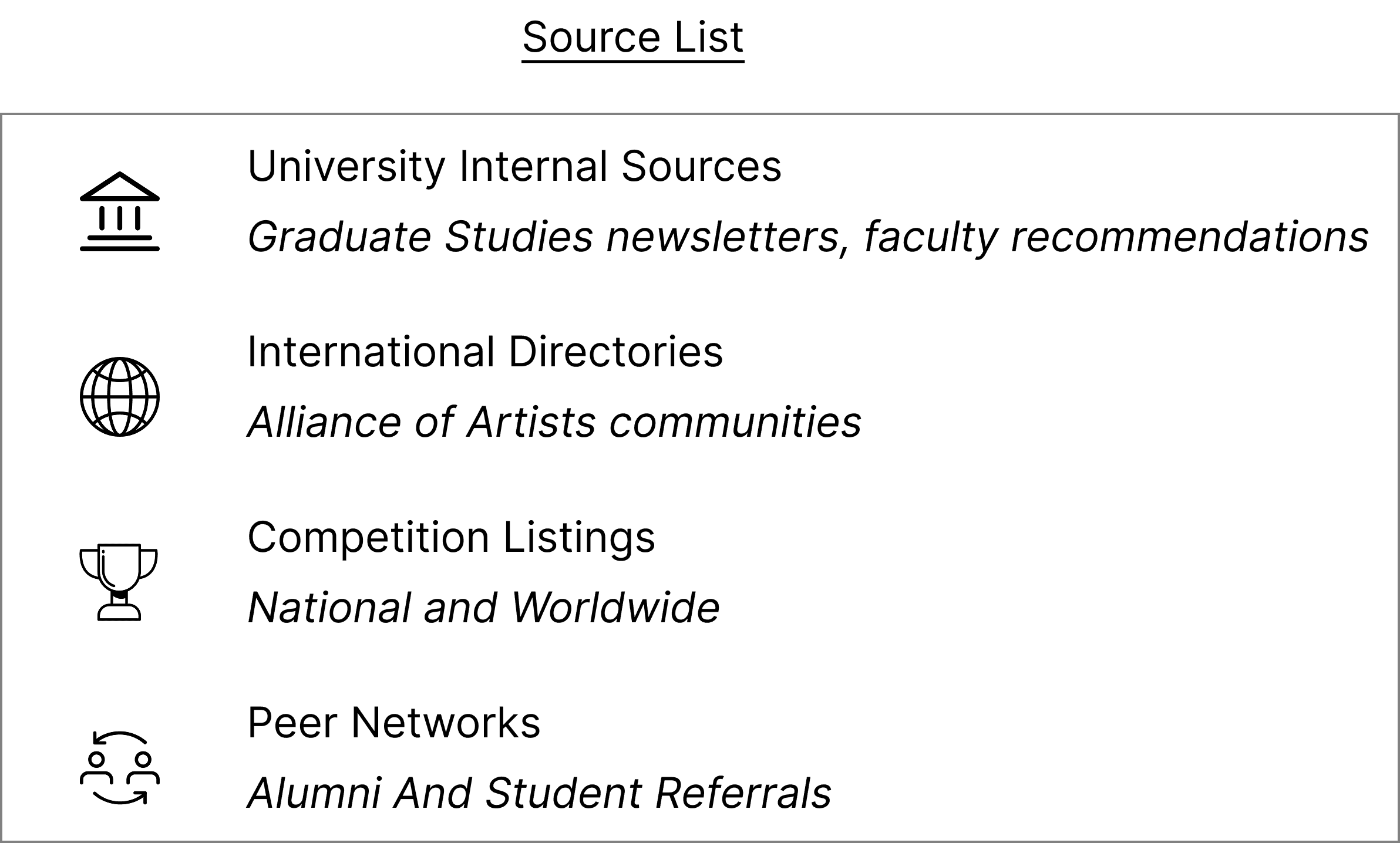
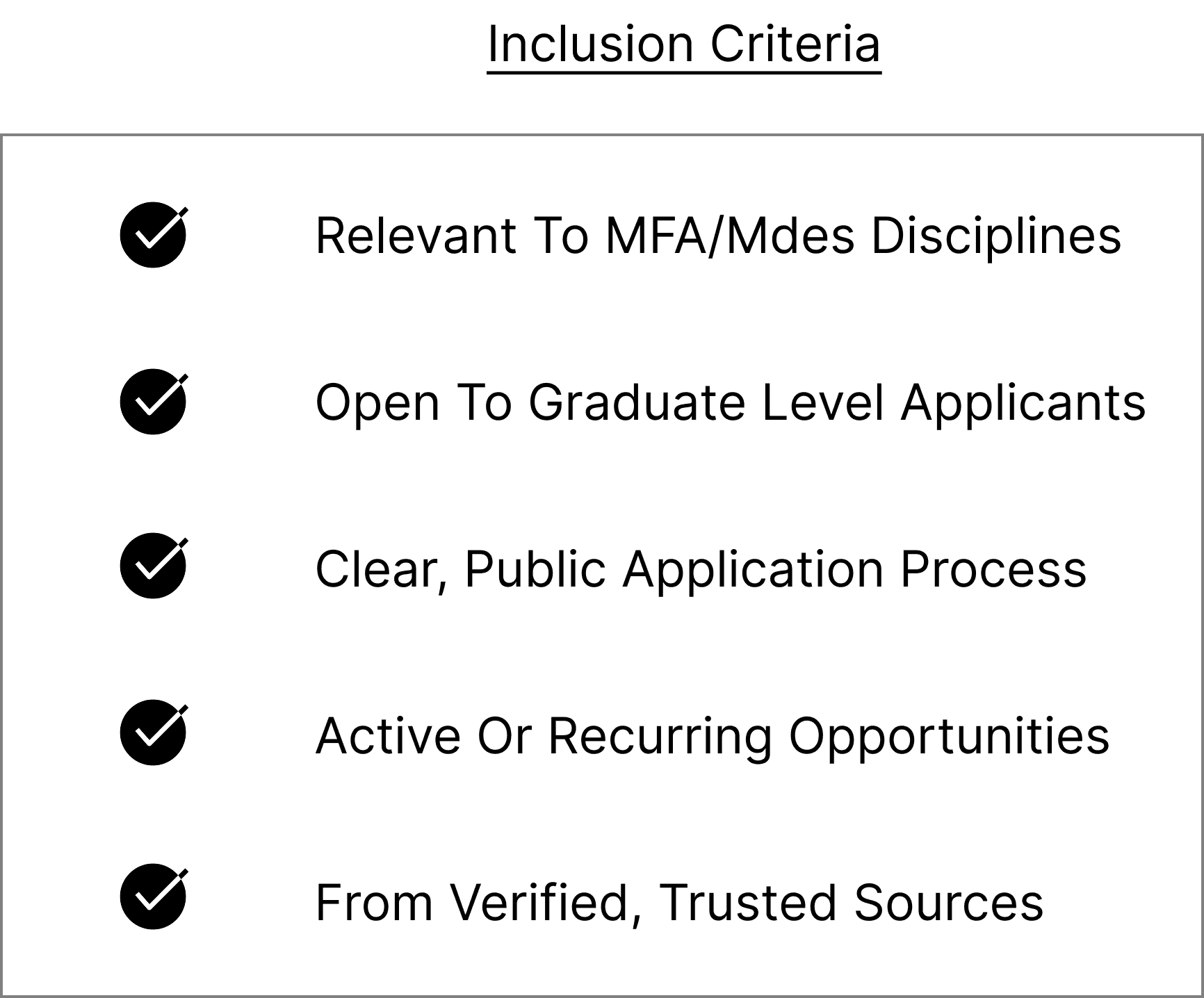
I began by focusing on Canadian universities, compiling graduate awards and funding opportunities for MFA/MDes students. However, realizing the scope was too limited, I expanded the database to include international opportunities that offered richer, more diverse experiences. This led me to research creative programs in India, China, and Mexico, from artist residencies and biennale-linked grants to cross-disciplinary design competitions, broadening the database into a truly global resource for creative funding.
Information Architecture &
Schema
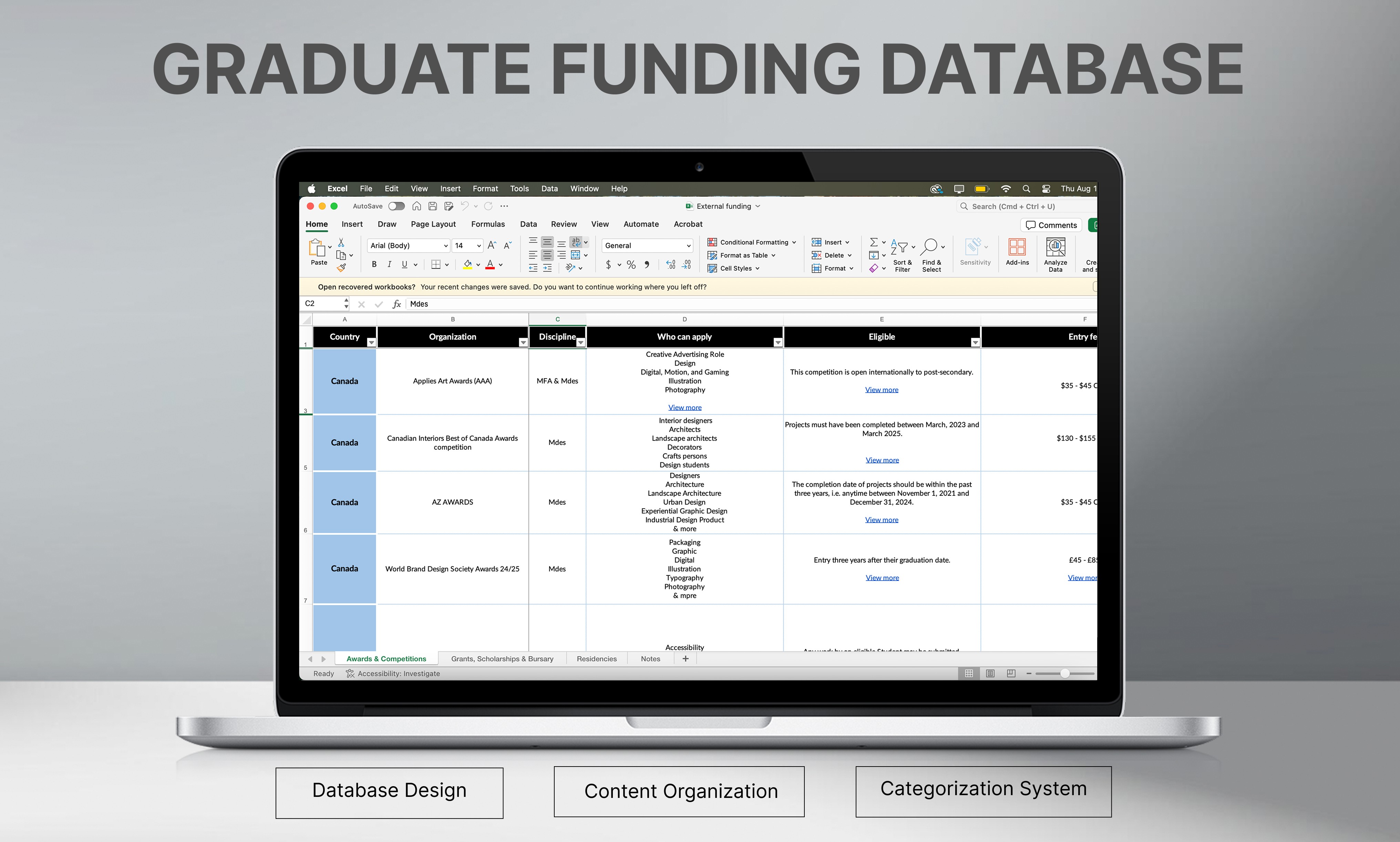
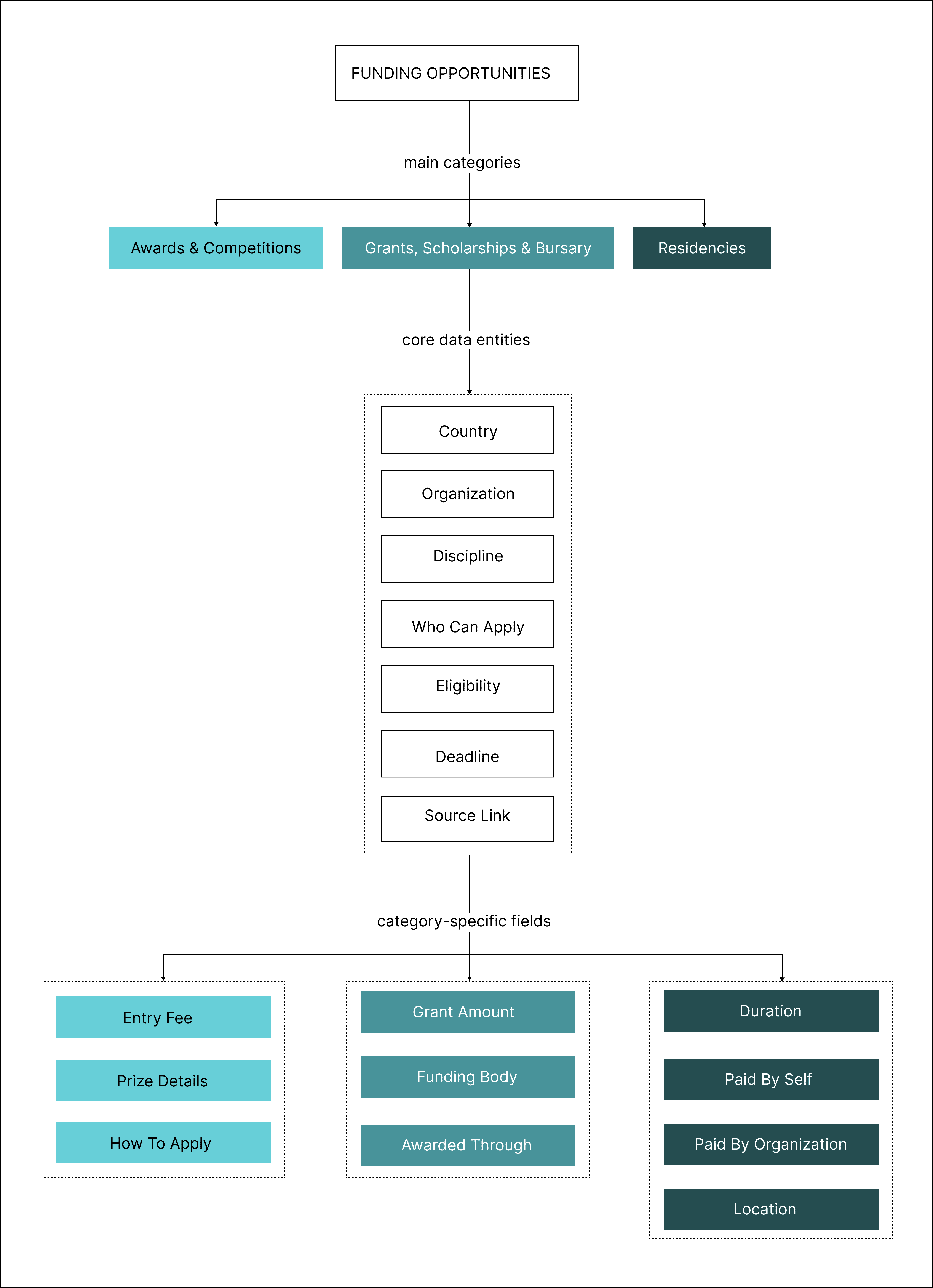
The database is organized in a three-tier hierarchy. At the top level, opportunities are divided into Awards & Competitions, Grants, Scholarships & Bursary, and Residencies. The second level categorizes entries by Country, Discipline, and Deadline, making it easy to filter by relevance. The third level captures core data entries Organization, Who Can Apply, Eligibility, and Source Link ensuring each listing is complete, searchable, and consistent across all categories.
Scroll below to see the Information Architecture.
Wireframe & Layout
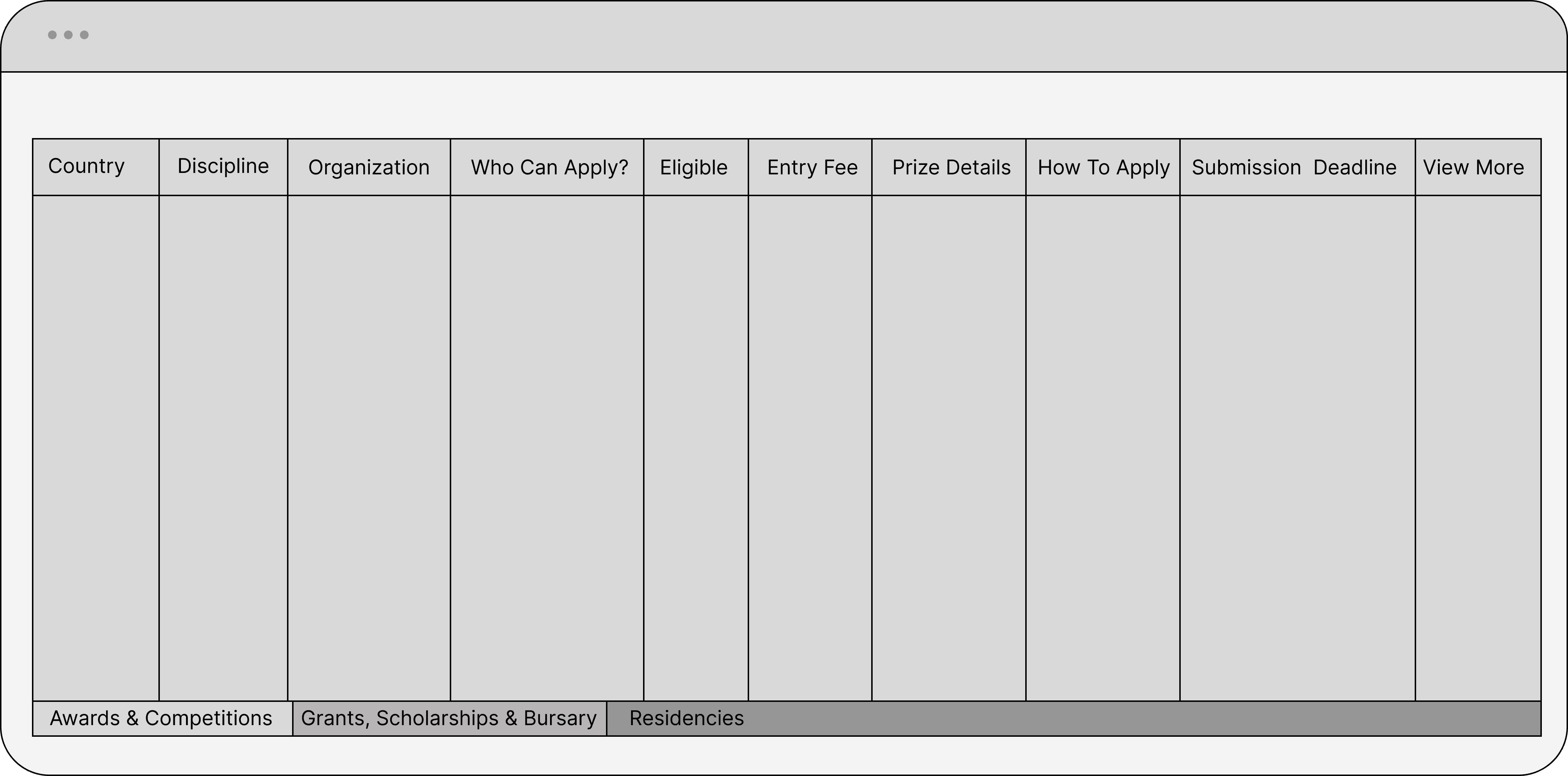
Each of the three categories has its own tab. The main table view surfaces opportunities by Country, Discipline, with expandable rows that reveal core details such as Organization, Eligibility, How to Apply and view more. This layout balances clarity for quick scanning with the depth needed for detailed exploration.
Prototype
I built the prototype in Google Sheets, using it as the primary tool for data entry, structure, and testing since it’s widely used and easy to adopt within academic fields. This made it simple for both students and staff to engage with the database without additional onboarding. This lightweight prototype made it easy to test the information architecture, filters, and layout before committing to a more complex platform.
Feedback & Peer Review
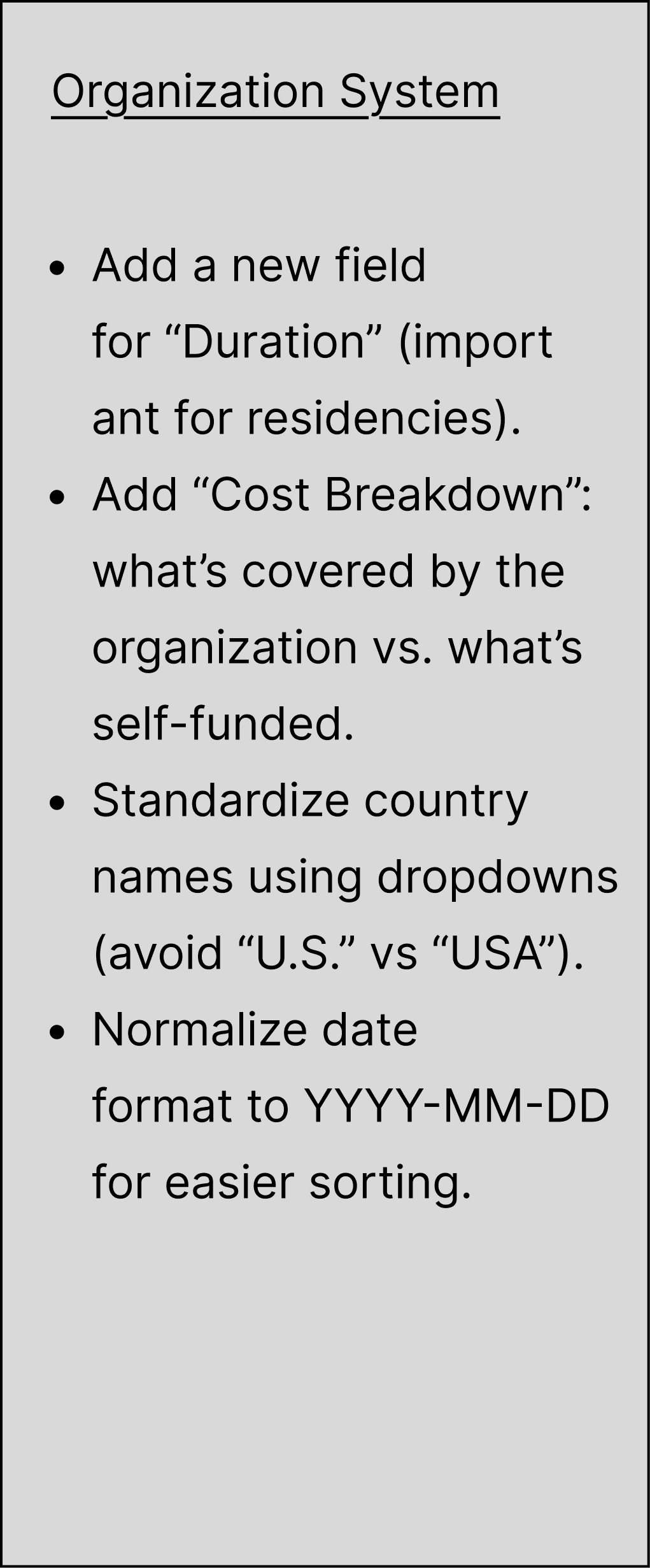
Changes After First Prototype
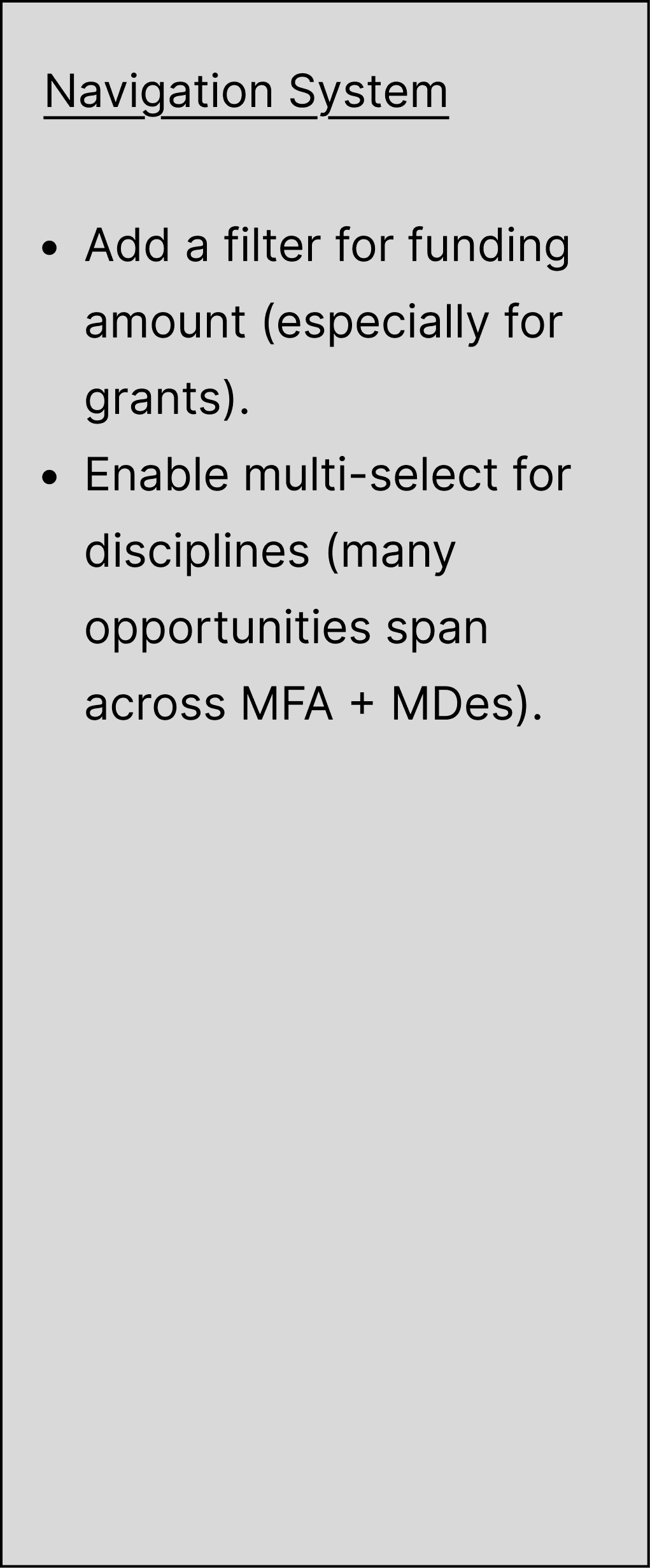
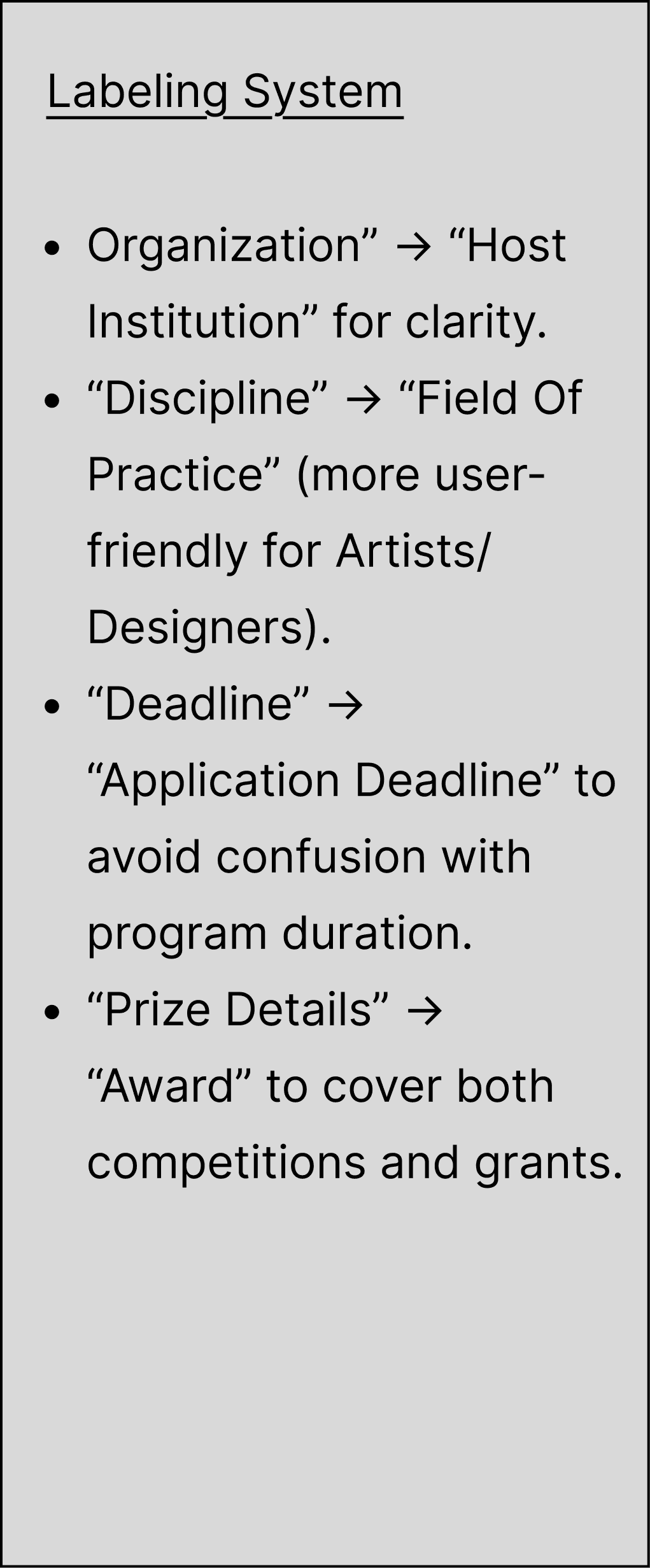
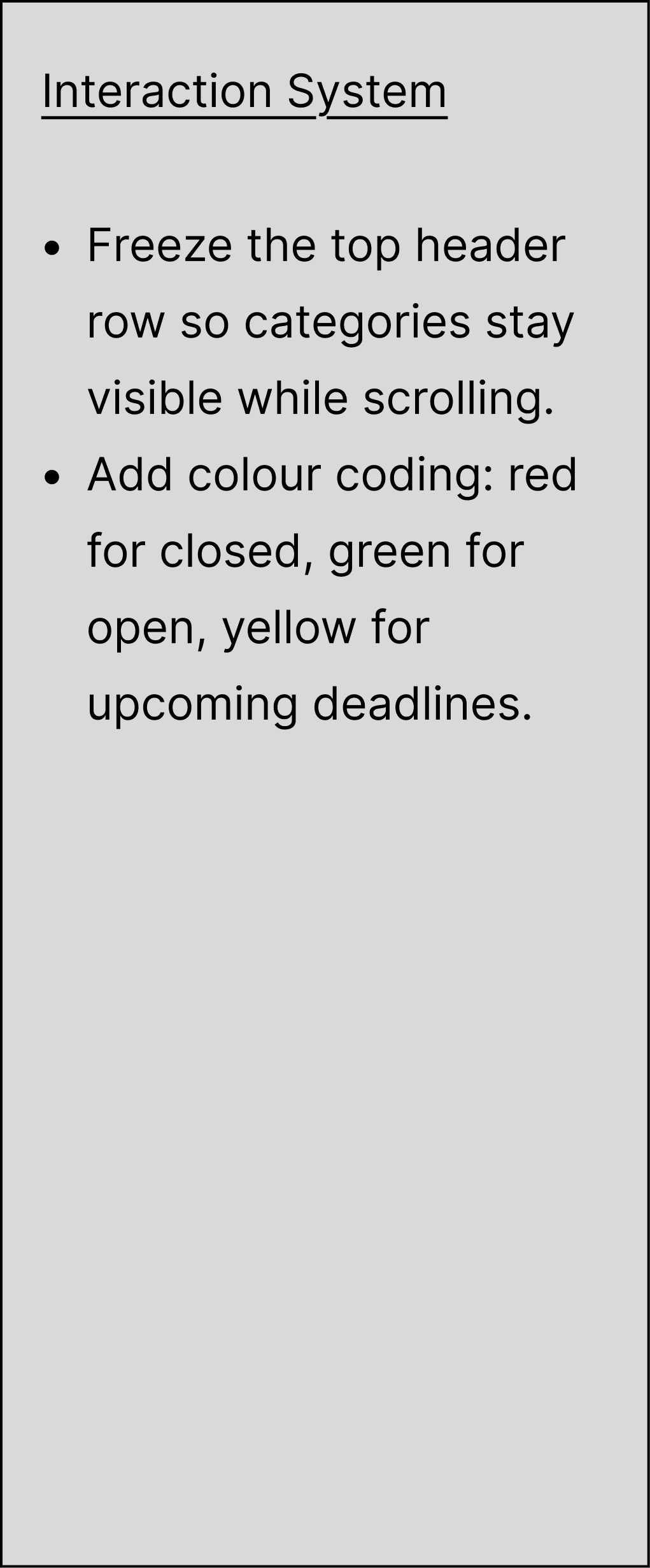
High-Fidelity Dashboard
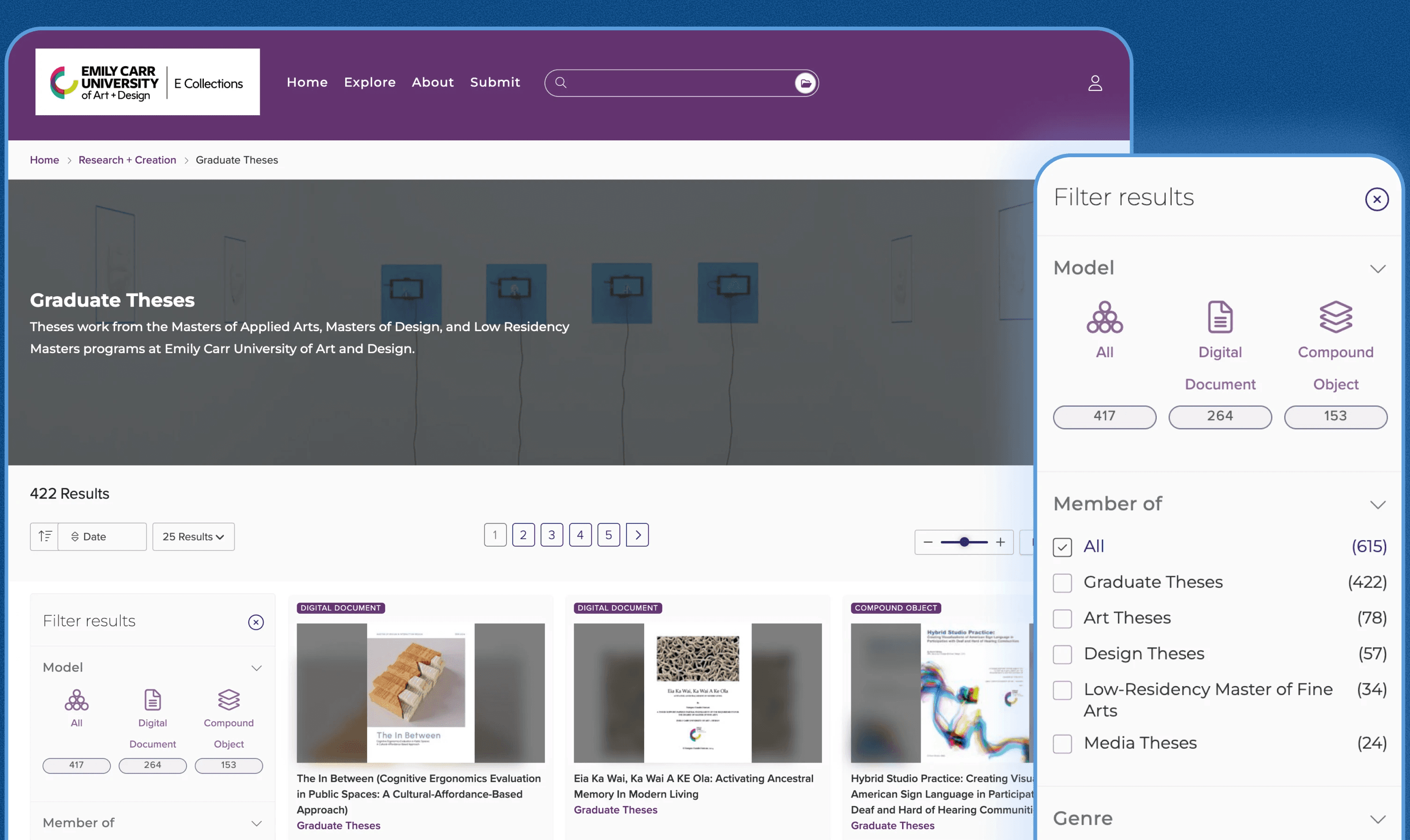
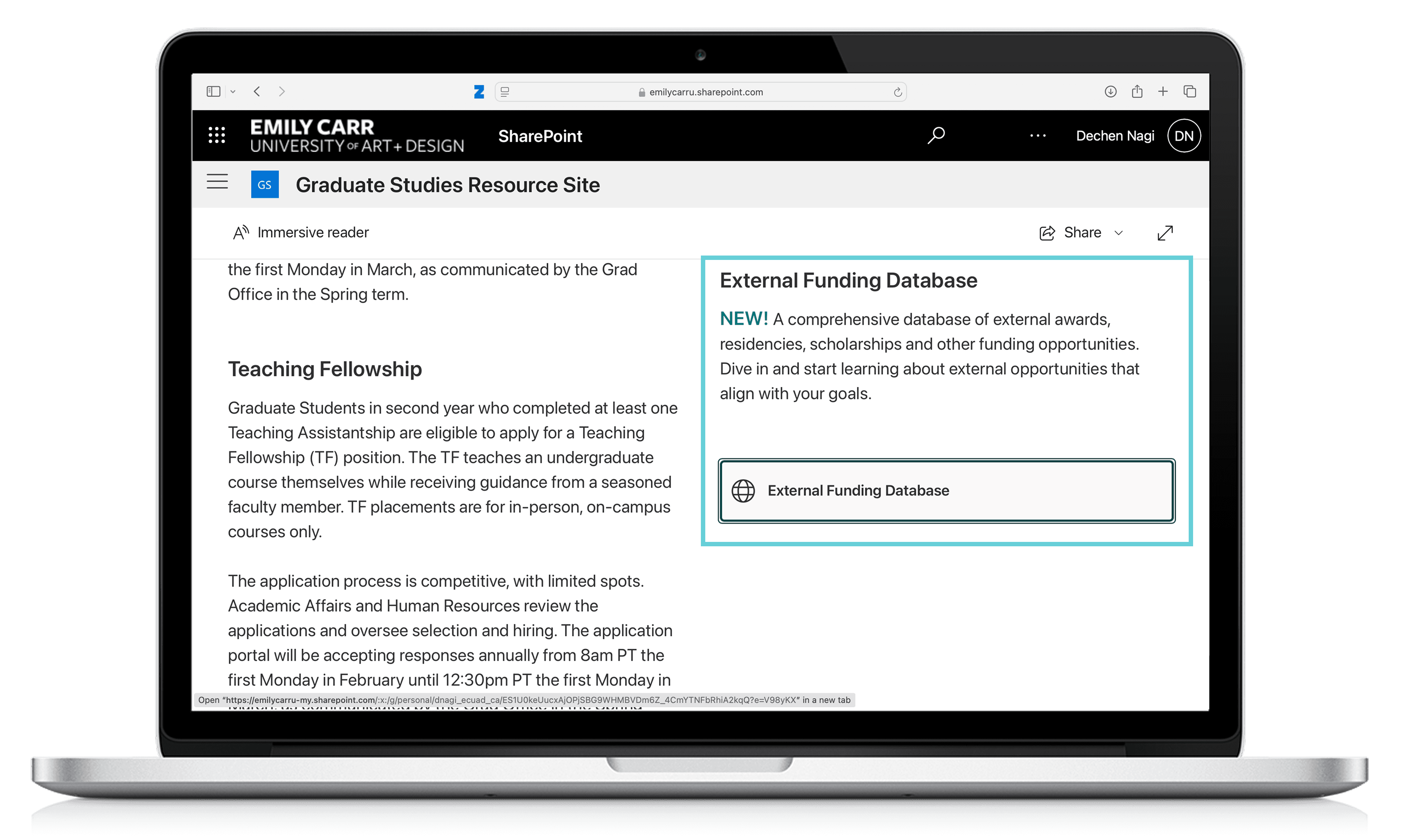
The published version of the database was made available through the Graduate Studies Office portal and shared via the student newsletter.
MFA and MDes students could access it anytime, explore
opportunities by category, and use filters to quickly find relevant awards, grants, and residencies.
Published on Grad Office Portal
Maintenance
A Maintenance SOP was created to keep the database accurate and sustainable, outlining monthly updates, quarterly
audits, and annual refreshes with clear roles for staff, students, and faculty.
View Other Projects